Project 01
The Dosso Refinery.
A 100,000 barrel-per-day refinery and industrial complex in south-west Niger — designed, financed, built and operated by Zimar Group with group company Hightec Energy, then transferred to the Nigerien State.
- Investment
- $1.9 billion
- Design capacity
- 100,000 bpd in three trains
- First phase
- One 30,000 bpd train
- Location
- Dosso, Niger
- Structure
- 16-year build–operate–transfer
- Counterparty
- The Nigerien State
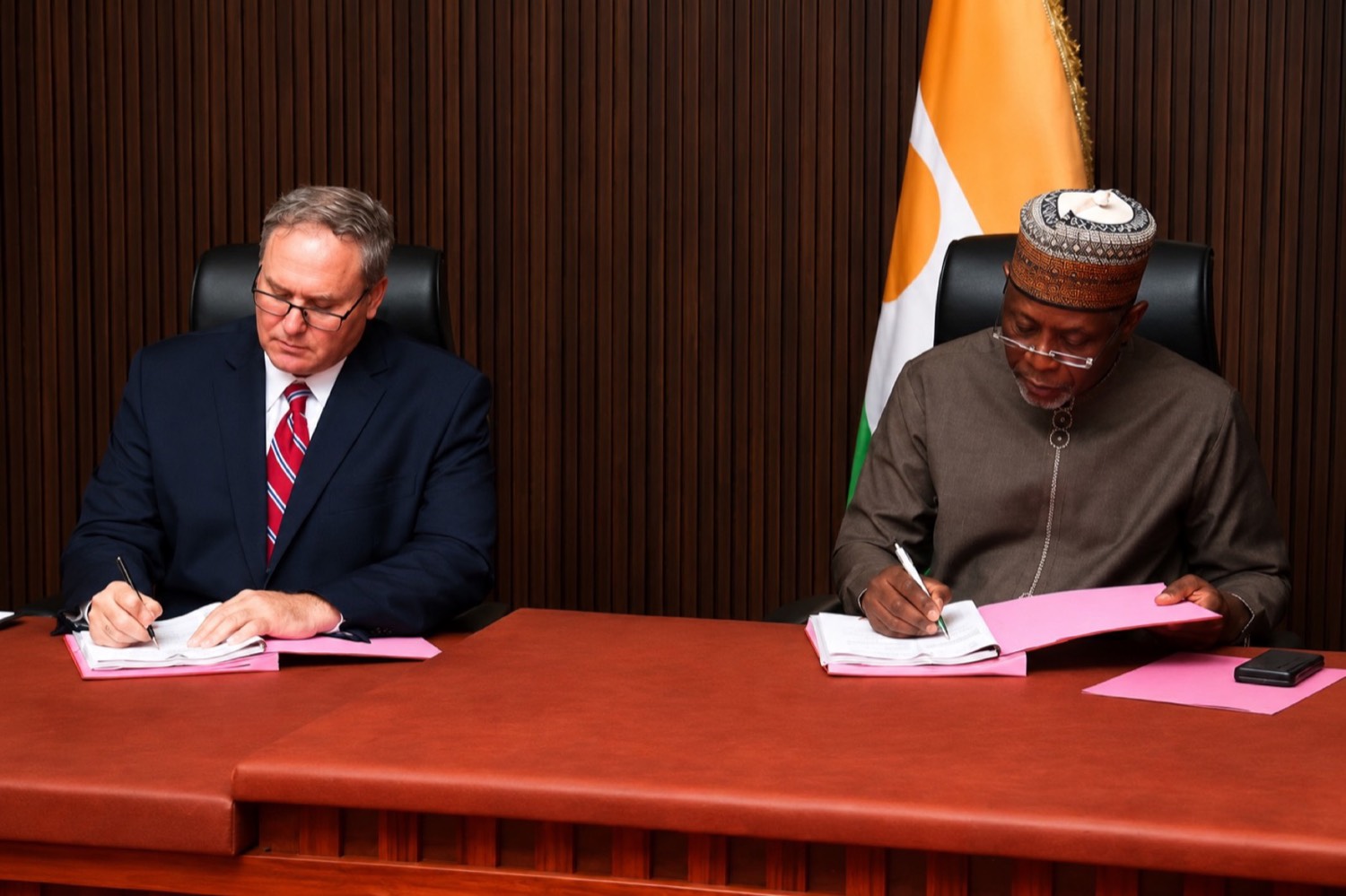
- Signed
- 15 August 2026, Niamey
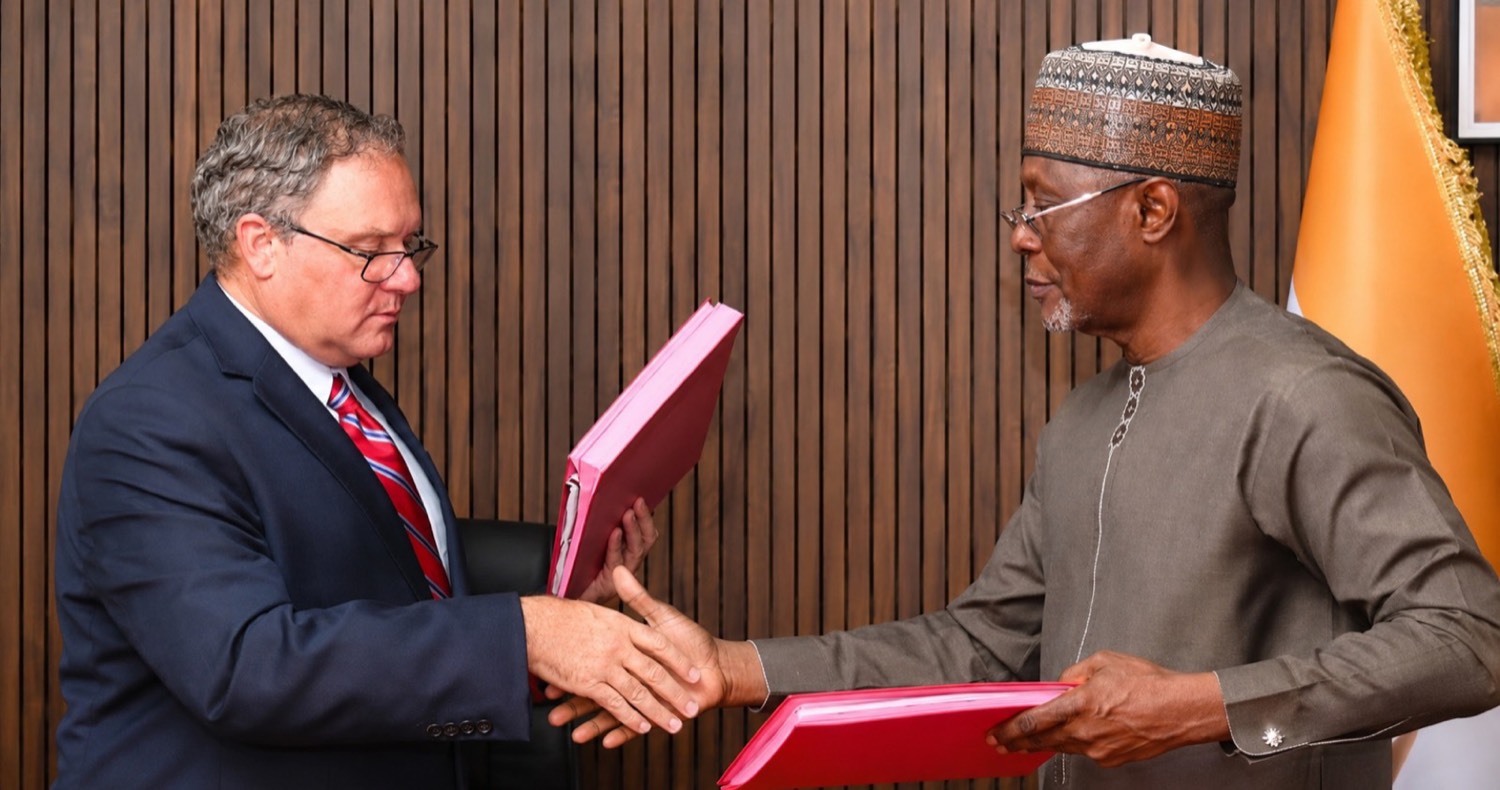
Footage
The moment it was signed.
Two clips recorded at the signing. Both play with sound.
01
Scope of the mandate.
- Refining
- A 100,000 barrel-per-day refinery processing Nigerien Agadem crude, built as three trains so each can run while the others are maintained.
- Phasing
- A single 30,000 barrel-per-day train comes first. Two further 35,000 barrel-per-day trains take the refinery to full capacity once the first phase is operating.
- Products
- Eight products: gasoline, diesel, jet fuel and kerosene, LPG, propylene, base oils, bitumen and fuel oil.
- Petrochemicals
- Propylene from the refinery is the feedstock for a planned polypropylene unit, extending value capture beyond fuels.
- Complex
- A master-planned site around the refinery: expansion land, a solar farm, a dry port and rail siding, and an air cargo terminal.
- Offtake
- Domestic supply first. Group company MEA Energy, with stations, trucks and a trading desk in West Africa, is positioned as offtaker of excess volumes.
- Employment
- Thousands of direct and indirect roles across construction, operations and the supplier base, with local-content commitments.
- Standards
- Designed to IFC Performance Standards and Nigerien regulation, with continuous emissions monitoring and a community grievance mechanism.
02
From signature to transfer.
A build–operate–transfer structure: Zimar carries delivery and operating risk, and the asset passes to the Republic of Niger at the end of the term.
-
Phase 01
Agreement signed
Executed with the Nigerien State on 15 August 2026, covering design, financing, construction, operation and eventual transfer.
-
Phase 02
Project company and FEED — three to four months
The Nigerien project company is incorporated and front-end engineering design is completed, with the owner’s engineer on site.
-
Phase 03
Financial close — within sixteen months
Funding for the first phase finalised with lenders, institutions and export credit agencies.
-
Phase 04
Construction — three years
The first 30,000 barrel-per-day train, followed by two further trains, with utilities, storage and sulphur recovery.
-
Phase 05
Operations — thirteen years
Zimar operates the complex under the concession term.
-
Phase 06
Transfer to the Republic of Niger
Full ownership and operation pass to the Nigerien State.
03
What it changes for Niger.
At 100,000 barrels per day, Dosso is expected to rank among the three largest refineries in West Africa by capacity, behind Nigeria’s Dangote refinery and Ghana’s Sentuo refinery.
It is roughly five times the capacity of Niger’s existing refinery at Zinder, operated by SORAZ, which processes about 20,000 barrels per day.
The complex is designed to process Nigerien crude for domestic consumption, reducing import dependence. Dosso sits within about 320 km of the borders of Nigeria, Benin, Burkina Faso and Mali, so it can also supply Niger’s landlocked neighbours.
“We will develop the infrastructure needed to support the refinery and create thousands of direct and indirect jobs.”
Benjamin Day · Chief Executive Officer, Zimar Group
Enquiries
Press and counterparty enquiries.
Project documentation and financial information are released to qualified counterparties under non-disclosure agreement.